

In my line of work, I talk a lot about finding your balance. Usually, we’re talking about balancing nutrients or balancing food enjoyment with health goals. But a personal passion of mine, that many of you share, is about a different kind of balance- how to eat in a way that feels good for your body and the planet.
I like to approach this by looking at what we can add to our lives, rather than what we think we have to give up. It isn’t about restriction, “clean” eating, or following a rigid set of rules. It’s about being a conscious consumer and meeting yourself where you are. We can care for the earth without sacrificing our relationship with food.
The Ripple Effect
Our current food system is one of the biggest contributors to climate change. Understanding the “why” helps us stay motivated when we’re making choices at the grocery store.
- Reducing Our Footprint: Agriculture is responsible for a significant portion of global emissions. Generally, animal-based foods, particularly beef and lamb, have a higher carbon footprint than plant-based proteins due to the land, water, and methane produced.
- Protecting Our Resources: Diversifying our protein sources helps conserve water and land. For context, plant-based proteins like tofu often require significantly fewer resources than intensive livestock farming. For example, producing one pound of beef requires roughly 1,800 gallons of water, whereas a pound of tofu requires about 300 gallons.
- Supporting Soil Health: Monocropping (growing only one crop over and over) exhausts the soil’s nutrients. By diversifying what we eat, adding more beans, seeds, and different grains, we encourage farmers to grow a wider variety of plants, which keeps the soil healthy and the ecosystem resilient.

The Emotional Layer
Before we dive into the how-to, it’s important to acknowledge the emotional side of sustainability. For many of us, the idea of reducing food waste can trigger some complicated feelings.
If you grew up in a household with food insecurity, or if you were taught from a young age that leaving food behind was wasteful, perhaps hearing reminders of those who didn’t have enough, the push for sustainability can feel like a heavy weight. It can lead to compulsive eating, feeling like you must finish every bite on your plate, even if you’re full, because throwing it away feels like a moral failure.
I want to offer a gentle reframe. Choosing not to overextend your fullness is an act of respect towards your body. We can find ways to be eco-friendly that don’t require you to sacrifice your own comfort or disconnect you from your body’s internal cues in the process. To practice sustainability while honoring your body:
- Give yourself permission to save it: This is much easier when you know that food isn’t going to waste. Tucking it away in a container is a simple way to honor your body’s satiety cues.
- Compost if you can: In Chicago, services like WasteNot Compost or The Urban Canopy allow you to return nutrients to the earth without the guilt of wasting food.
- Acknowledge the scarcity mindset: If you notice a sense of urgency to finish a meal, it may help to simply lean into the permission to be done. Sustainability isn’t built on ignoring your own needs; it’s about finding a rhythm where your appetite and your values can live together in a way that feels peaceful, not forced.
Practical, Non-Restrictive Shifts
Sustainability doesn’t require an “all or nothing” approach. We are looking for progress, not perfection.
Power of Addition
You don’t have to go vegan to be an environmental steward. I’m a big fan of thinking about what you can add to your meals, in this case, plant-based proteins.
- 50/50 Blend: If you’re making anything with meat try using half the amount and bulking it up with finely chopped mushrooms, lentils, or black beans. This adds volume, fiber, and other nutrients while cutting the carbon footprint of your meal in half.
- Explore Tofu & Tempeh: These aren’t just replacements; they are delicious, versatile proteins. If you’re a beginner, try extra-firm tofu, press out the water, toss it in cornstarch and spices, and air-fry it. It’s also a budget-friendly way to hit your protein needs.
Think Local
We are lucky to live in a city with numerous resources for eco-conscious eating. Shopping locally reduces food miles (the distance food travels from farm to fork).
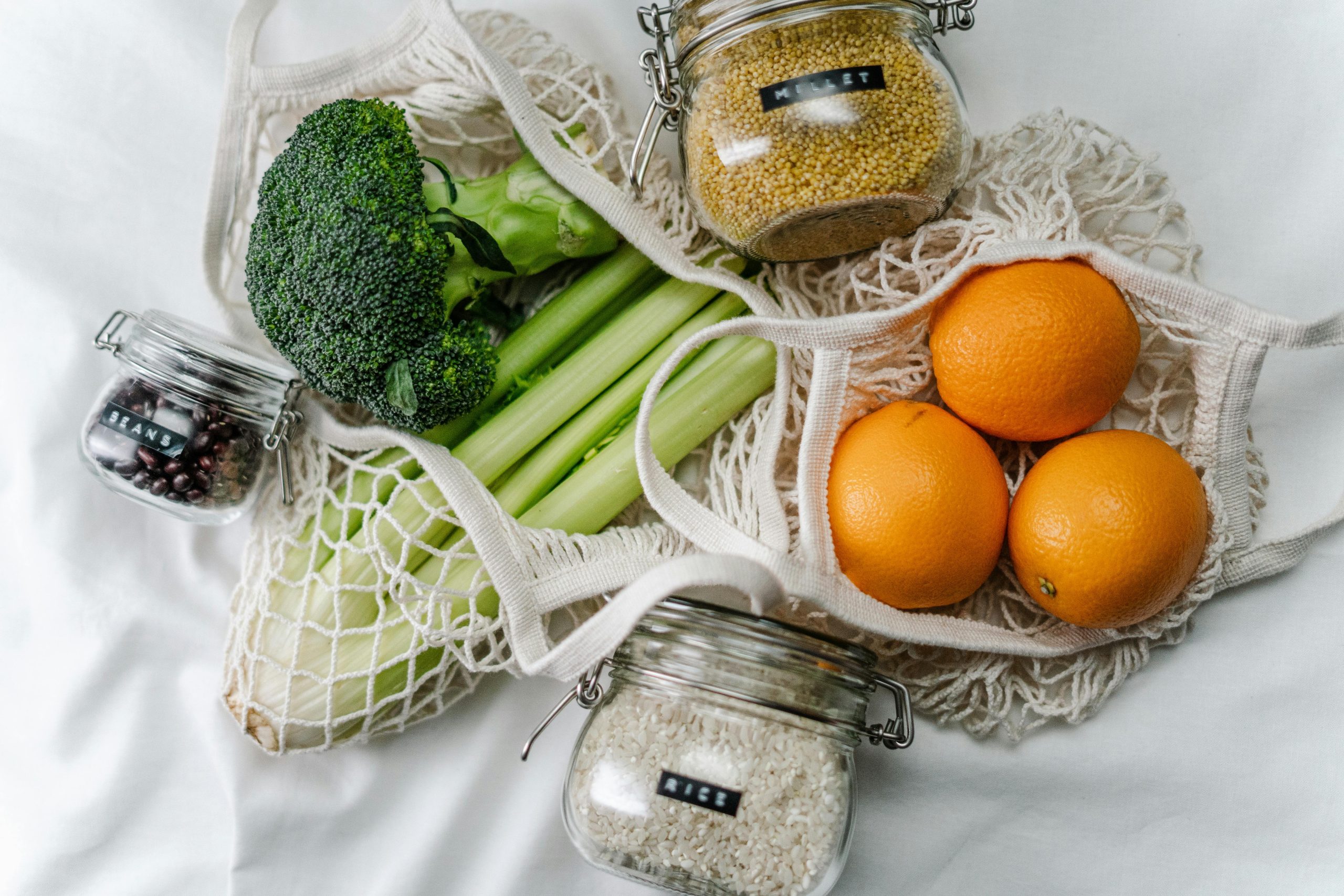
- The Eco Flamingo: Located in Lincoln Square, this is Chicago’s first zero-waste general store. Bringing your own jars for bulk grains, lentils, and even dish soap is a great way to reduce single-use plastic.
- CSAs and Farmers Markets: Joining a Community Supported Agriculture (CSA) program connects you directly with Midwest farmers.
- Food Rescue: Organizations like Imperfect Foods or Misfits Market help save produce that stores would otherwise toss. This prevents food waste, a major source of methane in landfills.
Mindful Food Management
One of the most sustainable things you can do is simply eat the food you already have, at a pace that feels good for you.
- Shop your pantry first: Before heading to the store, see what’s hiding in the back of your cupboard.
- Designate: Save a spot in your fridge for items that are nearing their expiration date.
- Freeze for later: if you bought a large quantity of something and realize you can’t eat it all before it turns, use your freezer! Freezing is the ultimate pause button for food waste.
The Bottom Line
Sustainable eating should never feel like a burden or a source of guilt. If you have the capacity to shop at a farmers market this week, that’s wonderful. If this week is hectic and you’re relying on frozen meals and convenience, that is okay too.
Sustainability is about the long game. When we move away from the all or nothing mentality, we create habits that actually last. By adding a few more plants to our plates and being a bit more mindful of our waste, while still listening to our bodies, we’re doing our part for the future.
Reflection Prompts
- What does “balance” in my eating look like right now—both for my body and my values?
- Where might I be able to add more variety or plant-based options in a way that feels realistic?
- Are there any habits around food (like finishing everything on my plate) that no longer feel supportive?
- What is one small, sustainable shift I could try this week?
- How can I approach food choices with more flexibility and less pressure?

Meet the Author
Meet the Founder
Jenn Graus is the incredible founder behind Thrive Ahead Co. and a licensed clinical professional counselor. Jenn is an active guide for her clients, is involved, approachable and attentive.
“You can bet that in a tough session, we’ll still find ways to connect with humor as I truly believe when used well it’s one of the most integrating skills we can have, to know and hold this lightness at the same time as the seriousness and even pain that life brings us.”
(Neurodivergence)(Neurodivergence) neurodivergence. Neurodivergence


