

If you’ve spent any time on social media lately, you’ve probably come across the term “fibermaxxing.”
Like many nutrition trends, it has a catchy name and a flood of videos promising life-changing results.
Unlike many nutrition trends, though, this one is actually worth paying attention to.
For years, nutrition conversations have revolved around protein. And while protein absolutely deserves its place in a balanced diet, I’m excited to see fiber finally getting some of the spotlight.
Fiber is one of those nutrients that quietly supports so many different parts of our health, yet it’s often overlooked. It plays a role in digestion, heart health, blood sugar management, gut health, and even our mental well-being.
The best part?
You don’t need expensive supplements or a complete overhaul of your eating habits to get more of it.
Sometimes, a few simple additions can make a meaningful difference.
So… What Is Fibermaxxing?
Despite the trendy name, fibermaxxing is actually a pretty simple idea.
It’s the practice of intentionally increasing the amount of fiber in your daily diet.
Instead of focusing on what you should eliminate, fibermaxxing encourages you to think about what you can add.
More beans, fruits, vegetables, whole grains, nuts or seeds.
As a dietitian, I love this approach because it shifts the conversation away from restriction. Rather than worrying about cutting foods out, we’re looking for opportunities to nourish our bodies with foods that offer lasting benefits.

Why Fiber Deserves More Attention
Fiber does far more than help you stay regular.
Here are just a few of the ways it supports your health.
A Happier Digestive System
This is the benefit most people have heard about. Fiber helps move food through your digestive tract by adding bulk and softness to stool, making bowel movements easier and more regular. If you’ve ever struggled with constipation or irregular digestion, increasing fiber (gradually!) can make a noticeable difference.
More Stable Energy Throughout the Day
Have you ever eaten something sugary and felt great for an hour… only to crash shortly afterward? Fiber helps slow the absorption of carbohydrates, leading to steadier blood sugar levels. Instead of dramatic spikes and crashes, meals that contain fiber can help provide more consistent energy throughout the day.
Supporting Heart Health
Certain types of fiber can help lower cholesterol by reducing how much cholesterol your body absorbs. While heart health is influenced by many different factors, consistently eating fiber-rich foods is one simple way to support it over time.
Your Gut and Your Brain Are More Connected Than You Think
One of the most exciting areas of nutrition research is the relationship between the gut and the brain.
The beneficial bacteria living in our digestive system rely on fiber as a food source. When these bacteria thrive, they contribute to a healthier gut microbiome—which researchers are continuing to explore in relation to stress, anxiety, mood, and overall mental health.
While fiber isn’t a replacement for mental health care, it’s one of many ways we can support our overall well-being from the inside out.


Not All Fiber Does the Same Thing
There are two primary types of fiber, and both have important jobs.
Soluble fiber dissolves in water and forms a gel-like consistency during digestion. It’s found in foods like:
- Oats
- Chia seeds
- Beans
- Avocados
This type of fiber helps support healthy cholesterol levels, stable blood sugar, and a thriving gut microbiome.
Insoluble fiber doesn’t dissolve in water. Instead, it helps move waste through the digestive tract and supports regular bowel movements.
You’ll find it in foods like:
- Apple skins
- Pears
- Cucumbers
- Whole grains
- Many vegetables
Rather than focusing on one type over the other, aim for variety. Different foods provide different benefits, and your body appreciates the diversity.
Most of Us Aren’t Eating Enough
Most adults should aim for 30 grams or more of fiber each day, yet many people fall well short of that goal.
The good news?
You don’t need to hit 30 grams overnight.
In fact, I wouldn’t recommend it.
Increasing fiber too quickly can lead to bloating, gas, or digestive discomfort while your body adjusts.
Instead, make small changes over time and remember to drink enough water, since fiber works best when it’s paired with adequate hydration.
One of my favorite questions to ask clients is:
“What could we add?”
Diet culture often teaches us to focus on taking things away.
No carbs. No sugar. No snacks. No fun!
Instead, I encourage people to think about building onto what they’re already doing.
That might look like:
🍎 Adding fruit alongside breakfast or lunch.
🫘 Stirring canned beans into soup, tacos, salads, or grain bowls.
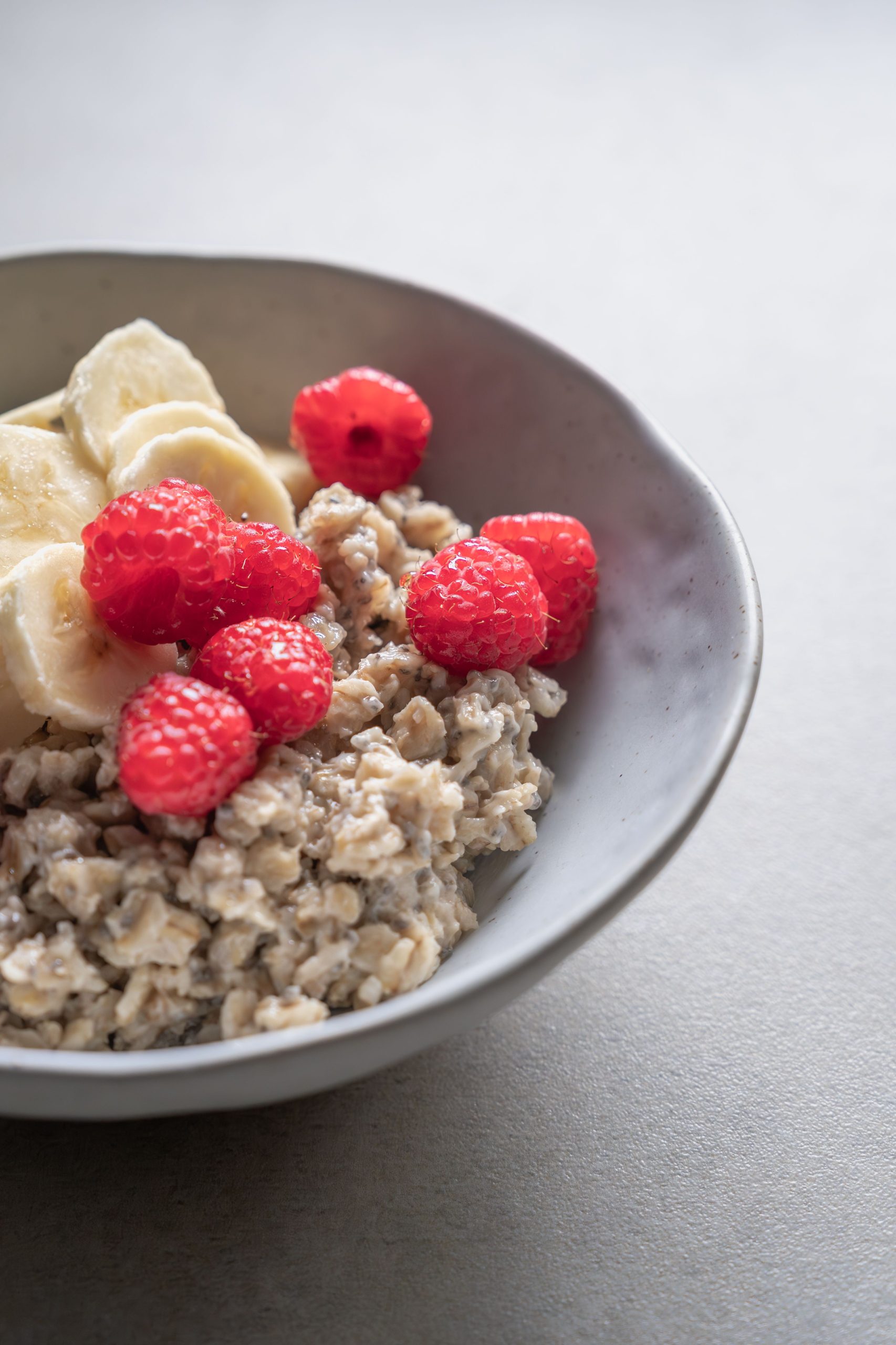
🌱 Mixing chia seeds into yogurt, oatmeal, or baked goods.
🥬 Tossing spinach into scrambled eggs or adding broccoli to pasta.
🥕 Keeping baby carrots or sliced peppers ready for easy snacks.
Sometimes simple swaps can also boost your fiber intake:
- White rice → brown rice or quinoa
- White bread → whole grain bread
- Traditional pasta → legume-based pasta
You don’t have to make every change at once.
One small addition is still an addition.
Small Changes Can Lead to Big Benefits
One reason I love talking about fiber is because it’s such an approachable place to begin.
Many of my clients already know fiber is “good for them,” but they aren’t sure why—or how to actually eat more of it.
Rather than chasing the newest wellness trend or aiming for perfection, we can focus on building habits that feel realistic and sustainable.
Nutrition doesn’t have to be all or nothing.
Sometimes the most meaningful change starts with asking yourself:
“What’s one thing I can add today?”
Because when we shift our focus from restriction to nourishment, healthy eating often feels a whole lot more doable.
Closing Thoughts
Fiber may be having a moment on social media, but its benefits have been around all along. Whether you’re hoping to support your digestion, stabilize your energy, improve your heart health, or simply build more balanced meals, increasing your fiber intake is one small change that can have a big impact over time.
You don’t have to completely change the way you eat overnight. Start with one addition, stay curious, and let those small, consistent choices add up.
Reflection Prompts
- What is one meal or snack I could add more fiber to this week?
- Am I focused more on restricting foods—or adding nourishing ones?
- Which fiber-rich foods do I already enjoy eating?
- What’s one small swap that feels realistic for me right now?
- How might my relationship with food change if I focused on adding instead of taking away?
Meet the Author
About Thrive Ahead Co.
Thrive Ahead Co. is an interdisciplinary mental health and wellness practice in Chicago’s Bucktown neighborhood, bringing together therapy, nutrition counseling, mental health occupational therapy, and other approaches to help people build lives that work for them.
(Neurodivergence)(Neurodivergence) neurodivergence. Neurodivergence


